
Newsletter / Reports
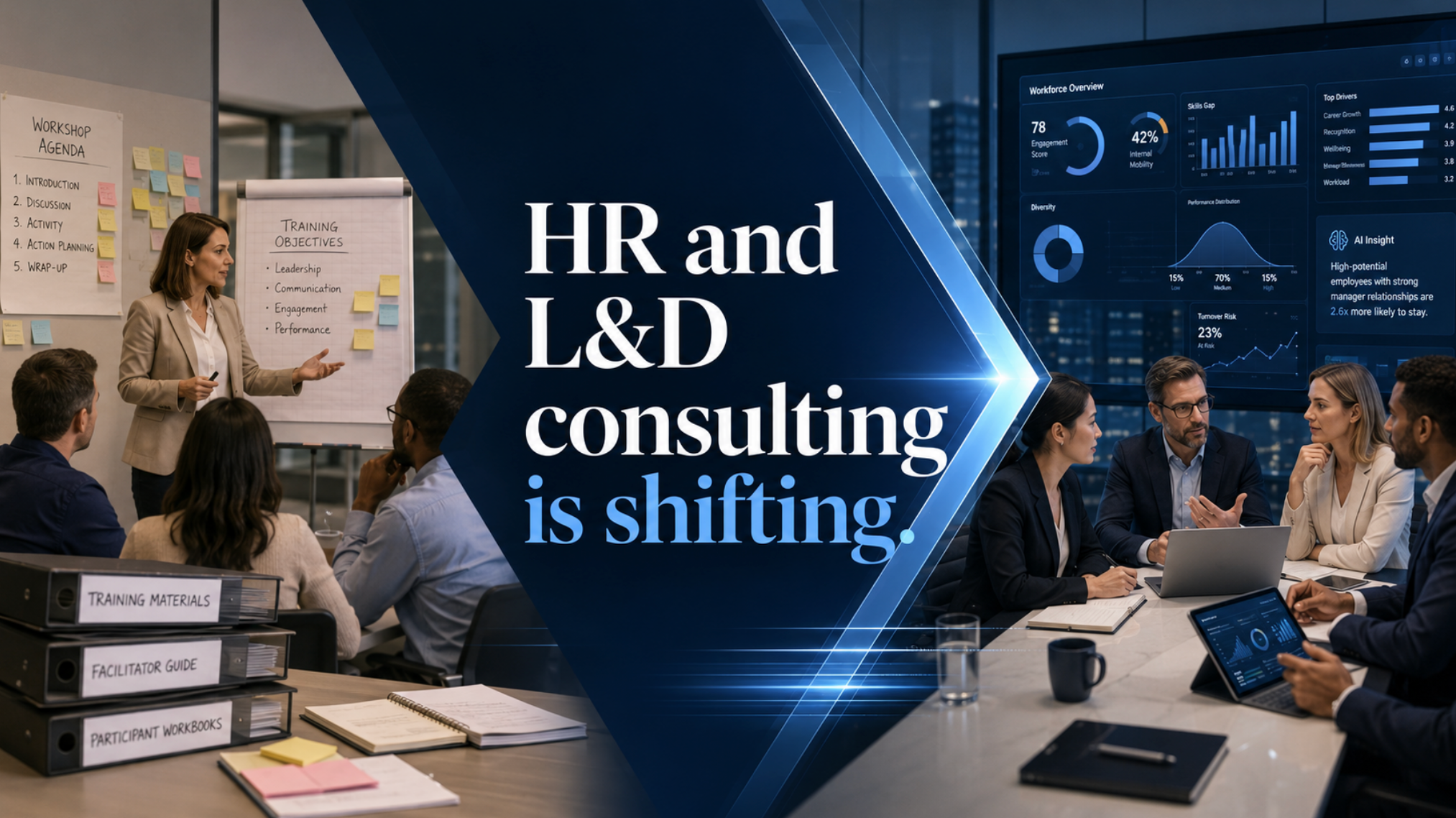
HR and L&D consulting is shifting.
By Dr. Reggie Padin, Aimpro + ExpandPro · May 20, 2026
The shift is already happening — HR and L&D consulting is moving from engagement surveys and training completion rates to system-level performance measurement. While most consultants are still trapped in the old paradigm of measuring what's easy (satisfaction scores, hours trained), forward-thinking firms are measuring what matters: whether workforce investments actually generate business results.
The catalyst? CFOs demanding ROI proof on every L&D dollar, combined with AI making system-wide analysis feasible for mid-market organizations that couldn't afford Big 4 consulting before.
The old model measured the wrong things
Traditional HR consulting built its reputation on engagement surveys and training metrics that correlate weakly with performance. A company can have 85% training completion rates and still see zero productivity improvement. Employees can report high satisfaction while revenue per employee stagnates.
The fundamental problem: these approaches treat hiring, training, performance management, and retention as separate functions. But employees don't experience them separately — they experience one continuous operating environment. When that environment sends mixed signals, performance suffers regardless of how much is spent on individual programs.
Consider a typical mid-market scenario: job posts promise "innovation and autonomy," onboarding teaches compliance procedures, performance reviews measure collaboration, but bonuses reward individual heroics. Three different systems sending contradictory signals. The result? Training doesn't stick, new hires leave within 18 months, and the L&D budget generates no measurable ROI.
System-level diagnosis is now possible
What's changing is the ability to measure organizational contradiction as a structured metric. The methodology exists to quantify misalignment across five critical dimensions: strategy vs. execution, promise vs. training, measurement vs. reward, teaching vs. reinforcement, and policy vs. practice.
When these systems fight each other, mid-market organizations typically waste $500K-$2M annually on contradictory workforce investments. But when alignment improves, the leverage is extraordinary. A targeted manager training intervention costing $18K can produce ~$204K in annual benefits by reducing turnover, improving training effectiveness, and shortening time to competency.
The technology infrastructure now exists to diagnose these contradictions systematically rather than relying on consultant intuition. Advanced analytics enables HR departments to make data-driven decisions about where misalignment is costing the most money.
Strategic consultants are capturing the value
While traditional HR consultants continue measuring engagement and training hours, strategic consultants are positioning themselves as system integrators who fix organizational contradictions. They're winning because they speak CFO language: dollar impact, ROI calculations, and measurable performance improvement.
The differentiation is methodology-driven. Instead of recommending more training or better surveys, they diagnose why existing investments aren't working. Low Learning-to-Performance conversion combined with low Manager Effectiveness diagnostically indicates a manager reinforcement gap, not a training design problem.
This shift mirrors what happened in operations consulting 20 years ago, when "Lean" moved from manufacturing buzzword to systematic methodology. Workforce Alignment is following the same path — from scattered best practices to rigorous diagnostic framework with measurable outcomes.
What to do this week
Audit one contradiction in your current client base. Pick a client where training completion is high but performance results are disappointing. Ask: what does the training teach versus what do managers actually coach in 1-on-1s? Document the gap — this is your first workforce alignment case study.
Position your next proposal differently. Instead of leading with training recommendations or engagement surveys, lead with system diagnosis: "Before we design new programs, let's measure whether your current workforce systems are fighting each other."
Learn the methodology framework. Download the contradiction assessment checklist and practice scoring one organizational dimension (strategy vs. execution is the easiest starting point) to build competence before client conversations.